

9 Modern Administrative (1902–2100)
The modern period is characterised by comprehensive civil administration, expanding state records, and ongoing social change.
Later events are typically well documented, but access may be restricted for privacy reasons; recent entries should be interpreted with this limitation in mind.
Earliest event: 1903 Latest event: 2025
4 entity types represented; 13 categories represented
| Date | 1903 |
|---|
The Suffragettes
The Suffragettes. For 11 years, women from the Women’s Political and Social Union (called ‘Suffragettes’) fought for women to get the vote. After World War I, women over 30 who own property are allowed to vote. In 1928, everyone over 21 was allowed to vote.
| Date | 1903 |
|---|
The Mersey Railway and the Lancashire & Yorkshire Railway's Liverpool Exchange to Southport was electrified.
The Mersey Railway converted to 600 V DC electric multiple-unit operation on 3 May 1903, thus eliminating the problems caused by steam traction in the long tunnel under the River Mersey, and the Lancashire & Yorkshire Railway's Liverpool Exchange to Southport (and on to Crossens) suburban commuter line was similarly electrified at 625 V by March 1904. Both of these lines initially used a fourth rail system.
| Date | 1908 |
|---|
The airplane era in the UK
The airplane era in the UK began with the first recorded aviation event in 1784, and it was not until the late 19th century that aviation truly took off. The first airshow was held in 1908, featuring pioneer aviators like Louis Bleriot and the Wright brothers. The UK's aviation industry grew rapidly, with the establishment of major airlines such as British Overseas Airways Corporation (BOAC) and British European Airways (BEA). The post-war years saw these airlines play a crucial role in rebuilding the UK's economy and connecting the country to the rest of the world. The UK's aerospace industry also saw significant developments, with the first commercial jetliner being the de Havilland Comet. The Vickers Viscount became the first successful turboprop airliner, and the Concorde, built with France, remains an icon of supersonic travel. These innovations were part of a broader trend of British manufacturers being bold innovators, yet also facing fragmentation and heavy state direction. The UK's aviation legacy is still visible today, with aircraft operated worldwide by airlines such as BOAC, BEA, TAA, Air France, Lufthansa, and countless regional carriers. The UK's mark on commercial aviation is still present, ensuring that Britain's contribution to the global aviation industry continues to be recognized and celebrated.
| Date | 1913 |
|---|
Sir Edward Penley Abraham
Sir Edward Penley Abraham, CBE, FRS (10 June 1913 – 8 May 1999) was an English biochemist instrumental in the development of the first antibiotics penicillin and cephalosporin. Abraham was born on 10 June 1913 at 47 South View Road, Shirley, Southampton. From 1924 Abraham attended King Edward VI School, Southampton, before achieving a First in Chemistry at The Queen's College, Oxford. Abraham completed his DPhil at the University of Oxford under the supervision of Sir Robert Robinson, during which he was the first to crystallise lysozyme,[1][7] an enzyme discovered by Sir Alexander Fleming and shown to have antibacterial properties, and was later the first enzyme to have its structure solved using X-ray crystallography, by Lord David Phillips.
| Date | 1914 |
|---|
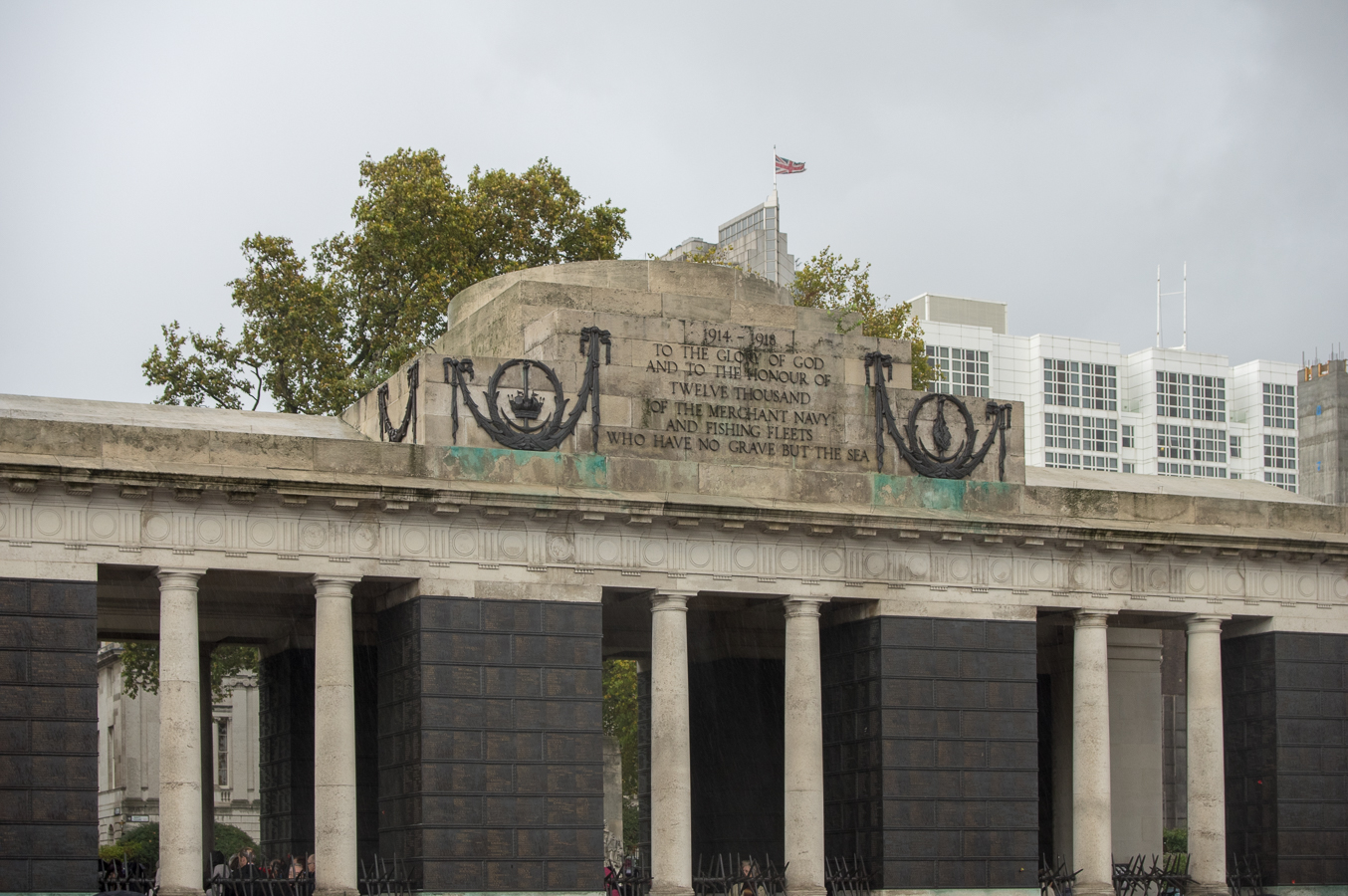
World War 1
World War 1. The war brought social change because women had to do the jobs of the men while they were fighting. Men from many other countries also helped Britain as part of the Allied Powers to eventually defeat Germany, Austria-Hungary, and the Ottoman Empire.
| Date | 1914 |
|---|
World War I, aka the Great War
World War I, also known as the Great War, was a global conflict from 1914 to 1918 that reshaped the world politically, socially, and technologically. Overview World War I lasted from 28 July 1914 to 11 November 1918 and involved most of the world's major powers, divided into two main coalitions: the Allies (including France, Great Britain, Russia, Italy, Japan, and later the United States) and the Central Powers (primarily Germany, Austria-Hungary, the Ottoman Empire, and Bulgaria). The war was fought across Europe, the Middle East, parts of Africa, and the Asia-Pacific region. Causes The war was triggered by the assassination of Archduke Franz Ferdinand of Austria-Hungary on 28 June 1914 by Gavrilo Princip, a Bosnian Serb nationalist. Underlying causes included: Rising nationalism and ethnic tensions in the Balkans Imperial rivalries and competition for colonies Militarization and an arms race among European powers Complex alliances that escalated local conflicts into a global war
| Date | 1917 |
|---|
Electrification of the London and South Western Railway (LSWR - L&SWR)
The electrification of the London and South Western Railway (LSWR) was a significant achievement that transformed suburban travel in England. The LSWR's electrification program began in 1917 and was a response to rising costs and the loss of traffic to street tramways. The third rail DC system was used, which was cheaper to install and maintain than the overhead systems then in use. The rolling stock was constructed by converting relatively new coaches built for suburban steam-hauled operation. The LSWR generated its own electric power at a new power station near Wimbledon. The electrification was a considerable success, with a frequent regular-interval timetable implemented. The Southern Railway, which took over the LSWR in 1923, continued to expand the electrified network, including the conversion of the LBSCR system and the installation of the third rail system over a large proportion of the suburban area of the Southern Railway. The Portsmouth Direct line was electrified in 1937, and the Southern Railway was nationalized in 1948, with further extensions of the system installed by British Railways.
| Date | 1918 |
|---|
Representation of the People Act, 1918
In June 1917 the House of Commons passed the Representation of the People Act. The following year the Act was approved by the House of Lords and became law. By 1918 there was a general feeling that the horrors of World War One had to be for something positive. Many men returning from war would not be able to vote under the 1884 laws. The Representation of the People Act gave the vote to all men over 21, whether they owned property or not. The act gave the vote to women over the age of 30 who met a property qualification, or whose husband did. This represented 8.5 million women - two thirds of the total population of women in the UK.
| Date | 1919 |
|---|
Irish War of Independence
The Irish War of Independence also known as the Anglo-Irish War, was a guerrilla war fought in Ireland from 1919 to 1921 between the Irish Republican Army (IRA, the army of the Irish Republic) and British forces: the British Army, along with the quasi-military Royal Irish Constabulary (RIC) and its paramilitary forces the Auxiliaries and Ulster Special Constabulary (USC). It was part of the Irish revolutionary period. In April 1916, Irish republicans launched the Easter Rising against British rule and proclaimed an Irish Republic. Although it was defeated after a week of fighting, the Rising and the British response led to greater popular support for Irish independence. In the 1918 general election, republican party Sinn Féin won a landslide victory in Ireland. On 21 January 1919 they formed a breakaway government (Dáil Éireann) and declared Irish independence.
| Date | 1919 |
|---|
The world's first daily international air service
The establishment of the world's first daily international air service in 1919 by Aircraft Transport and Travel (AT&T), a precursor to British Airways, marked a pivotal moment in commercial aviation, connecting London to Paris.
| Date | 1920 |
|---|
Abolished of civil parish of Millbrook
Civil parish abolished; absorbed into Southampton CB
| Date | 1921 |
|---|
Anglo-Irish Treaty
The Irish Free State established in December 1922 under the Anglo-Irish Treaty of December 1921, initially as a Dominion.
| Date | 1921 |
|---|
The Railways Act 1921
The Railways Act 1921 (11 & 12 Geo. 5. c. 55), also known as the Grouping Act, is an act of Parliament enacted by the British government. It was intended to stem the losses being made by many of the country's 120 railway companies by "grouping" them into four large companies, dubbed the "Big Four". The system of the "Big Four" lasted until the nationalisation of the railways in 1947
| Date | 1922 |
|---|
Irish Free State
6 December 1922 Constitution of the Irish Free State, the new state was called the Irish Free State and became a Dominion of the British Commonwealth. It comprised 26 of the 32 counties of Ireland. Northern Ireland, which was made up of the remaining six counties, exercised its right under the Treaty to opt out of the new state. The Free State government consisted of the governor-general—the representative of the king—and the Executive Council (cabinet), which replaced both the revolutionary Dáil Government and the Provisional Government set up under the Treaty.
| Date | 1922 |
|---|
Irish Free State Aftermath and Transition to Republic
Irish Free State Aftermath and Transition to Republic The civil war concluded in 1923 with the victory of the pro-Treaty forces, but the political landscape remained contentious. Over the following years, the anti-Treaty faction, led by Éamon de Valera, eventually formed the Fianna Fáil party and entered government in 1932. De Valera's administration abolished the oath of allegiance and enacted a new constitution in 1937, which declared Ireland a sovereign, independent democratic state, further solidifying its independence from Britain. The establishment of the Irish Free State marked a pivotal moment in Irish history, representing a compromise between full independence and continued ties to Britain. The subsequent political developments laid the groundwork for the eventual establishment of the Republic of Ireland in 1949, fully severing the constitutional links with the British monarchy.
| Date | 1923 |
|---|
The Big four railway companies
The creation of the Big Four railway companies in the UK occurred in 1923 through the Railways Act 1921, which led to the grouping of 120 small railway companies into four major entities: the London and North Eastern Railway (LNER), the London, Midland and Scottish Railway (LMS), the Great Western Railway (GWR), and the Southern Railway. This process was initiated to streamline the railway system and improve efficiency, particularly after the First World War, which had exhausted many smaller companies. The grouping was officially implemented on January 1, 1923, and the companies were nationalized in 1948 to form British Railways.
| Date | 1925 |
|---|
Plaid Cymru is formed
Plaid Cymru is formed with the aim of disseminating knowledge of the Welsh language, which is in danger of dying out
| Date | 1926 |
|---|
The General Strike
A general strike took place in the United Kingdom from 4 to 12 May 1926. # It was called by the General Council of the Trades Union Congress (TUC) in an unsuccessful attempt to force the British government to act to prevent wage reductions and worsening conditions for 1.2 million locked-out coal miners. Some 1.7 million workers went out, especially in transport and heavy industry. It was a sympathy strike, with many of those who were not miners and not directly affected striking to support the locked-out miners. The government was well prepared, and enlisted middle- and upper-class volunteers to maintain essential services. There was little violence and the TUC gave up in defeat.
| Date | 1927 |
|---|
Diocese of Portsmouth Created
Diocese of Portsmouth separated from Winchester.
| Date | 1927 |
|---|
Diocese of Portsmouth Created
Diocese of Portsmouth separated from Diocese of Winchester.
| Date | 1928 |
|---|
Representation of the People Act, 1928
In 1928 women were finally given the franchise on the same terms as men. All adults over 21 could vote.
| Date | 1931 |
|---|
Statute of Westminster
The Statute of Westminster 1931 granted full legislative independence to the self-governing Dominions of the British Empire, marking a key step toward their sovereignty.
| Date | 1934 |
|---|
Explosion at Gresford Colliery in Wales
An explosion takes place at Gresford Colliery in Wales, leading to the deaths of 266 miners and rescuers
| Date | 1938 |
|---|
Holidays with Pay Act
The people who “did the trick” were the trade unionists, politicians and ordinary Britons who had spearheaded a 25-year campaign for all workers – no matter what their social standing – to receive paid leave from their annual toils. It was a tough battle, one that pitted campaigners against government intransigence and resistance from employers. And it would be a number of years after 1938 before the legislation truly transformed Britain’s holidaymaking landscape. But, as the millions packing their cases for destinations as diverse as Bognor Regis and Bali will attest, the long-term impact of the Holidays with Pay Act has been truly revolutionary.
| Date | 1939 |
|---|
The bombe - Computer by Alan Turing
The initial design of the British bombe was produced in 1939 at the UK Government Code and Cypher School (GC&CS) at Bletchley Park by Alan Turing, with an important refinement devised in 1940 by Gordon Welchman.[3] The engineering design and construction was the work of Harold Keen of the British Tabulating Machine Company. The first bombe, code-named Victory, was installed in March 1940 while the second version, Agnus Dei or Agnes, incorporating Welchman's new design, was working by August 1940.
| Date | 1939 |
|---|
World War II, or the Second World War
World War II, or the Second World War (1 September 1939 – 2 September 1945), was a global conflict between two coalitions: the Allies and the Axis powers. Nearly all of the world's countries participated. Tanks and aircraft played major roles, the latter enabling the strategic bombing of cities and delivery of the only nuclear weapons used in war. World War II was the deadliest conflict in history, causing the death of 60 to 75 million people. Millions died as a result of massacres, starvation, disease, and genocides, including the Holocaust. After the Allied victory, Germany, Austria, Japan, and Korea were occupied, and German and Japanese leaders were tried for war crimes. The causes of World War II included unresolved tensions in the aftermath of World War I and the rise of fascism in Europe and militarism in Japan. Key events preceding the war included Japan's invasion of Manchuria in 1931, the Spanish Civil War, the outbreak of the Second Sino-Japanese War in 1937, and Germany's annexations of Austria and the Sudetenland. World War II is generally considered to have begun on 1 September 1939, when Nazi Germany, under Adolf Hitler, invaded Poland, after which the United Kingdom and France declared war on Germany. Poland was also invaded by the Soviet Union in mid-September and was partitioned between Germany and the Soviet Union under the Molotov–Ribbentrop Pact. In 1940, the Soviet Union annexed the Baltic states and parts of Finland and Romania, while Germany conquered Norway, Denmark, Belgium, Luxembourg, and the Netherlands. After the fall of France in June 1940, the war continued mainly between Germany, now assisted by Fascist Italy, and the British Empire or British Commonwealth, with fighting in the Balkans, Mediterranean, and Middle East, East Africa, the aerial Battle of Britain and the Blitz, and the naval Battle of the Atlantic. By mid-1941, Yugoslavia and Greece had also been defeated by Axis countries. In June 1941, Germany invaded the Soviet Union, opening the Eastern Front. In December 1941, Japan attacked American and British territories in Asia and the Pacific, including Pearl Harbor in Hawaii, leading the United States to enter the war against the Axis. Japan conquered much of coastal China and Southeast Asia, but its advances in the Pacific were halted in June 1942 at the Battle of Midway. In early 1943, Axis forces were defeated in North Africa and at Stalingrad in the Soviet Union. An Allied invasion of Italy in July resulted in the fall of its fascist regime, and Allied offensives in the Pacific and the Soviet Union forced the Axis to retreat on all fronts. In 1944, the Western Allies invaded France at Normandy, and the Soviet Union advanced into Central Europe. During the same period, Japan suffered major setbacks, including the crippling of its navy by the United States, the loss of key Western Pacific islands, and defeats in South-Central China and Burma.
| Date | 1939 |
|---|
World War 2
Famous moments included evacuating British soldiers from Dunkirk in France (1940), the Battle of Britain (German air attacks stopped by British pilots, 1940), the Blitz (bombing raids on British cities, 1940-41), and D-Day/Normandy Landings (when the US, Canada and UK invaded German-occupied France, 1944).
| Date | 1947 |
|---|
Indian independence and partition
The Indian independence movement was a long struggle against British colonial rule, culminating in India gaining independence on August 15, 1947. Historical Context The Indian independence movement was a series of historic events aimed at ending British colonial rule in India. It began in the late 19th century and gained momentum in the early 20th century, marked by the formation of the Indian National Congress (INC) in 1885, which became a central platform for the demand for self-rule. The movement evolved through various phases, adopting different strategies, including non-violent resistance led by figures like Mahatma Gandhi and more radical approaches by others. British colonial rule in India began with the East India Company in the 18th century and transitioned to direct British Crown rule after the Sepoy Rebellion of 1857, known as the British Raj. Over decades, Indian nationalist movements, led by figures like Mahatma Gandhi and Jawaharlal Nehru, employed nonviolent resistance and civil disobedience to demand self-rule. The Indian National Congress, founded in 1885, became the primary organization advocating for independence, while the All India Muslim League, led by Muhammad Ali Jinnah, sought to protect Muslim interests and eventually demanded a separate state. The Partition of India occurred in 1947, dividing British India into the Union of India (predominantly Hindu) and the Dominion of Pakistan (predominantly Muslim), including present-day Pakistan and Bangladesh. The division was formalized by the Indian Independence Act of 1947, passed by the British Parliament, and implemented on August 14–15, 1947. The borders, known as the Radcliffe Line, were drawn hastily, splitting provinces like Punjab and Bengal along religious majorities.
| Date | 1948 |
|---|
The Windrush generation
People from the West Indies were invited to help Britain rebuild after the war or work in the NHS. Over the next decades, workers were invited from many other countries (including India, Pakistan and Bangladesh).
| Date | 1948 |
|---|
British Railways era
British Railways created from the Big Four with nationalization, and then privatised in 1996
| Date | 1949 |
|---|
Southern part of Ireland declared independence from Britain
The Catholic southern part of Ireland declared independence from Britain. It became a republic in 1949. Six mainly Protestant counties in the north stayed with Britain and became Northern Ireland (sometimes called ‘Ulster’). Protestants were usually of English or Scottish descent, while Catholics were usually of Irish descent.
| Date | 1950 |
|---|
Parish within Southampton Parliamentary Constituencies
Post‑war boundary reviews; continued urban representation
| Date | 1950 |
|---|
The first overseas by air UK package holiday.
The first overseas by air UK package holidays began with Horizon Holidays, founded by Vladimir Raitz in 1950. This company offered flights from London to Corsica, allowing customers to book both flights and accommodation in one payment. This marked the beginning of the modern package holiday concept, which later evolved with the introduction of commercial aviation and the rise of affordable air travel.
| Date | 1951 |
|---|
Festival of Britain
An exhibition in London that celebrated British industry, art and science.
| Date | 1953 |
|---|
Mount Everest was first successfully climbed, and returned.
Mount Everest was first successfully climbed on May 29, 1953, by Sir Edmund Hillary of New Zealand and Tenzing Norgay, a Sherpa from Nepal. The historic ascent took place during the 1953 British Mount Everest Expedition, led by Colonel John Hunt. Hillary and Norgay reached the summit at 11:30 a.m. on May 29, 1953, standing at 8,848 meters (29,029 feet), marking the first confirmed human achievement of reaching the highest point on Earth. Their climb was the culmination of decades of attempts by climbers from around the world, including earlier British expeditions that explored the North and South routes and reached altitudes above 8,000 meters
| Date | 1954 |
|---|
Shirley re‑established as separate parish
Shirley separated again as population increased
| Date | 1954 |
|---|
Shirley re‑established as separate parish
Separation reflecting population growth and urban reorganisation
| Date | 1954 |
|---|
Shirley re‑established as separate parish
Separation following population growth and urban reorganisation
| Date | 1954 |
|---|
Shirley re‑established as separate parish
Separation following population growth and urban reorganisation
| Date | 1954 |
|---|
The Modernisation Plan, Modernisation and Re-Equipment of British Railways by British Transport Commission
This report, known as the 'modernisation plan' was commissioned as part of an attempt to stem the losses being incurred by BR due to competition from road and air traffic. Among the recommendations taken up were massive spending - £1.2bn - on the replacement of all steam traction with diesel and electric, and construction of vast marshalling yards using automated shunting. The failure of the plan was that nothing was done to address pre-war working practises, or the 'common carrier' requirements which meant road haulage firms could cherry-pick the lucrative freight traffic and leave BR with the rest. The diesel traction was poorly procured, with some types scrapped only 10 years after their introduction. The failure of the plan led directly to the Beeching reports and closures 10 years later, and was seen by government as a squandering of a once-in-a-generation spending plan; the failure soured the relationship between railway and government for decades after. This document was published on 1st December 1954 by British Transport Commission.
| Date | 1959 |
|---|
Mike Osman
Mike Osman (born August 1959) is an English radio presenter, impressionist and entertainer. He was born in Millbrook, Southampton, as the fourth of seven brothers. After leaving Millbrook Community Secondary School at 16, he was briefly an apprentice metal-worker before joining the Royal Navy as a marine engineer and mechanic. He left the Navy in 1982 before joining the family roof tiling business. In his spare time, he started working in holiday camps and clubs as a semi-professional entertainer, before turning full-time in 1984.
| Date | 1965 |
|---|
Mass package holidays by air
Thomson Organisation, a Canada-based corporation with widespread media interests in the UK, decided to buy into the travel business in 1965, this was seen as a turning point. Big business saw the potential of package holidays, as Thomson acquired Riviera Holidays, Universal Sky Tours and Gaytours, names that disappeared within a few years. It also acquired Universal Sky Tours’ own charter airline, Britannia, and by the end of the 1960s Britannia was taking delivery of state-of-the-art Boeing 737 jets that transformed the economics and image of package holidays.
| Date | 1966 |
|---|
The Tragedy of Aberfan
The Tragedy of Aberfan, 116 children and 28 adults die as a coal waste heap slides and engulfs a school in Aberfan, South Wales
| Date | 1966 |
|---|
England wins the football World Cup
England wins the football World Cup. They won 4-2 against Germany.
| Date | 1966 |
|---|
The Severn Bridge between England and Wales
The Severn Bridge between England and Wales is officially opened by Queen Elizabeth II
| Date | 1968 |
|---|
Last mainline steam locomotive
The last mainline steam locomotive to operate in Great Britain was the Fifteen Guinea Special, which ran its final journey on August 11, 1968. This train was the last steam-hauled passenger service on the standard gauge mainline, marking the end of steam locomotive operations on British Railways. The ban on mainline steam services was implemented shortly after this date, with the exception of the Flying Scotsman, which was allowed to continue operating due to a specific clause in its purchase contract.
| Date | 1969 |
|---|
Representation of the People Act 1969
Representation of the People Act extends vote to men and women over 18
| Date | 1969 |
|---|
Investiture of Prince Charles as the Prince of Wales
Investiture of Prince Charles as the Prince of Wales is watched by large crowds in Caernarfon, Wales and by millions on television
| Date | 1969 |
|---|
The Troubles in Northern Ireland
The Troubles in Northern Ireland. British troops arrived in summer 1969 to try and reduce growing tensions between Unionists (mostly Protestant, who want Northern Ireland to stay with Britain) and Nationalists/Republicans (mostly Catholic, who want Northern Ireland as part of the Republic of Ireland). However, the Catholic community felt the soldiers were more aligned with the Unionist government, sparking over 30 years of violence and bombing known as ‘the Troubles’. A peace deal was signed in 1998, which gave Northern Ireland its own locally-elected government.
| Date | 1972 |
|---|
Miners Strike
The 1970s UK miners' strikes, particularly in 1972 and 1974, were pivotal industrial actions over pay disputes that led to national power shortages and significant political consequences. 1972 Miners' Strike The 1972 strike began on 9 January 1972 after wage negotiations between the National Union of Mineworkers (NUM) and the National Coal Board (NCB) broke down. Miners’ pay had fallen behind other industrial workers, earning 3.1% less than the average manufacturing worker by 1970, despite historically high living standards in the 1960s. The NUM demanded a 43% pay rise, while the government offered only around 7–8%. The strike involved flying pickets, targeting power stations, steelworks, ports, and coal depots, which disrupted coal transport and electricity supply. By 9 February, a state of emergency was declared due to power shortages, and voltage reductions affected the national grid. The strike ended on 28 February 1972 after miners accepted an improved pay offer, making them among the highest-paid working-class workers at the time. The strike highlighted the economic importance of coal and the power of organized labor in the UK. 1974 Miners' Strike The 1974 strike was triggered by continued disputes over pay and working conditions. The NUM again threatened industrial action, and the government, led by Edward Heath, faced severe energy shortages. To conserve electricity, the government introduced the three-day working week for commercial electricity users starting 1 January 1974, limiting electricity supply to non-essential services. The strike and associated energy crisis contributed to the fall of Heath’s Conservative government, demonstrating the political influence of the miners. Broader Context The 1970s strikes occurred during a decade of industrial unrest in Britain, with miners leveraging their control over coal supplies to exert pressure on the government. Coal remained the primary energy source, and wage stagnation, pit closures, and competition from oil imports intensified tensions. The strikes also set the stage for later confrontations in the 1980s under Margaret Thatcher, who implemented stricter measures to limit union power.
| Date | 1972 |
|---|
Bloody Sunday
British troops kill 14 protestors in Derry, Northern Ireland.
| Date | 1972 |
|---|
Local Government Act 1972
The Local Government Act nineteen seventy two reorganised local government in England and Wales and provided the framework for the creation of new counties districts and metropolitan authorities
| Date | 1973 |
|---|
Britain joined the EEC
Britain joined the European Economic Community. It was a precursor to the European Union.
| Date | 1973 |
|---|
The Three-Day Week
Strikes by coal miners meant there was not enough fuel for power stations. For two months, companies could only use electricity three days a week.
| Date | 1974 |
|---|
Southampton District
Non‑metropolitan district
| Date | 1974 |
|---|
Technological Revolution
The advent and spread of Personal Computers, ongoing
| Date | 1974 |
|---|
British Airways
British Airways, formed from, BOAC &BEA, British Overseas Air Corporation & British European Airways. British Airways earliest corporate ancestor is the first British airline, Aircraft Transport and Travel (AT&T), which was founded on 5 October 1916 as a subsidiary of Airco, an aircraft manufacturer. AT&T operated the world's first daily scheduled international flight for commercial aviation on 25 August 1919. Birmingham Small Arms Company (BSA) established Daimler Air Hire on 7 June 1919 and acquired AT&T and its parent Airco in 1920. After the Airco subsidiary, including AT&T, filed for bankruptcy, BSA acquired its aircraft from the liquidator and combined these assets with Daimler Air Hire to form Daimler Airway in 1921. On 31 March 1924, Daimler Airway joined with three other pioneer airlines that started up during the immediate post war period—Handley Page Transport (established in 1919), Instone Air Line (1919), and British Marine Air Navigation Co Ltd (1923)—to form Imperial Airways. Imperial developed routes throughout the British Empire to India, some parts of Africa and later to Canberra, Australia. Meanwhile, a number of smaller UK air transport companies had begun operating, and by 1935 many of these had merged to form the privately owned British Airways Ltd. Following a government review, Imperial Airways and British Airways were nationalised in November 1939 to form the British Overseas Airways Corporation (BOAC)
| Date | 1974 |
|---|
CP/M Operating System - Computers
CP/M, originally standing for Control Program/Monitor and later Control Program for Microcomputers, is a mass-market operating system created in 1974 for Intel 8080/85-based microcomputers by Gary Kildall of Digital Research, Inc. CP/M is a disk operating system and its purpose is to organize files on a magnetic storage medium, and to load and run programs stored on a disk. Initially confined to single-tasking on 8-bit processors and no more than 64 kilobytes of memory, later versions of CP/M added multi-user variations and were migrated to 16-bit processors. CP/M's core components are the Basic Input/Output System (BIOS), the Basic Disk Operating System (BDOS), and the Console Command Processor (CCP). The BIOS consists of drivers that deal with devices and system hardware. The BDOS implements the file system and provides system services to applications. The CCP is the command-line interpreter and provides some built-in commands. CP/M eventually became the de facto standard and the dominant operating system for microcomputers, in combination with the S-100 bus computers. This computer platform was widely used in business through the late 1970s and into the mid-1980s. CP/M increased the market size for both hardware and software by greatly reducing the amount of programming required to port an application to a new manufacturer's computer. An important driver of software innovation was the advent of (comparatively) low-cost microcomputers running CP/M, as independent programmers and hackers bought them and shared their creations in user groups. CP/M was eventually displaced in popularity by DOS following the 1981 introduction of the IBM PC.
| Date | 1975 |
|---|
The first widely recognized personal computer made public.
The first widely recognized personal computer made public was the Altair 8800, released in 1975. The Altair 8800, introduced in 1975, is generally considered the first commercially available personal computer aimed at individual users and hobbyists, sold as a kit for $439 that required assembly and technical knowledge to operate. Its release marked the beginning of the personal computer revolution, inspiring enthusiasts and future entrepreneurs to explore computing outside large institutions. Other iconic machines of this era included the Apple II (1977), which added high-resolution color graphics, sound, and gaming capabilities, and the Commodore PET (1977), one of the first to come fully assembled with an integrated monitor and tape drive. These early PCs were popular with hobbyists but remained a niche product overall. That began to change in the 1980s as prices dropped and more consumer-friendly models hit the market.
| Date | 1978 |
|---|
Winter of Discontent
Over 4 million people went on strike, including gravediggers, hospital staff, lorry drivers and rubbish collectors.
| Date | 1981 |
|---|
Brixton Riots
There were riots in London and some other cities in reponse to racism by police.
| Date | 1981 |
|---|
IBM PC
The IBM Personal Computer (model 5150), often referred to as the IBM PC, is the first microcomputer released in the IBM PC model line and the basis for the IBM PC compatible de facto standard. Released on August 12, 1981, it was created by a team of engineers and designers at International Business Machines (IBM), directed by William C. Lowe and Philip Don Estridge in Boca Raton, Florida. Powered by an x86-architecture Intel 8088 processor, the machine was based on open architecture and third-party peripherals. Over time, expansion cards and software technology increased to support it. The PC had a substantial influence on the personal computer market; the specifications of the IBM PC became one of the most popular computer design standards in the world. The only significant competition it faced from a non-compatible platform throughout the 1980s was from Apple's Macintosh product line, as well as consumer-grade platforms created by companies like Commodore and Atari. Most present-day personal computers share architectural features in common with the original IBM PC
| Date | 1984 |
|---|
Miners Strike
The miners' strike in the UK, known as the 1984–1985 miners' strike, was a significant industrial conflict that shook the British coal industry and the nation. It began on March 6, 1984, and lasted until March 3, 1985, when it ended after nearly a year of conflict. The strike was led by the National Union of Mineworkers (NUM) against the National Coal Board (NCB), a government agency. The strike was a response to proposed closures of uneconomic pits, which threatened the livelihoods of miners and their communities. The strike was marked by violent confrontations between pickets and police, and it ended in a decisive victory for the Conservative government, leading to the closure of most collieries across the UK. The strike is often regarded as one of the most bitter industrial disputes in British history, with over 26 million person-days of work lost during its duration. Mrs Thatcher had seen how miners' strikes in 1972 and 1974 caused blackouts as power stations were left without fuel, undermining the governments of the day. She was determined to win any battle with the miners and had prepared meticulously for a potential strike, including stockpiling six months' worth of coal to keep the country's power stations running.
| Date | 1992 |
|---|
Local Government Act 1992
The Local Government Act nineteen ninety two enabled the review and creation of unitary authorities in England leading to later structural changes
| Date | 1992 |
|---|
The Channel Tunnel opens
The Channel Tunnel opens. It links UK to France by rail. Passenger, Cars, and Freight
| Date | 1993 |
|---|
European Union was formed 1 Nov 1993
Since the beginning of the institutionalised modern European integration in 1948, the development of the European Union has been based on a supranational foundation that would "make war unthinkable and materially impossible"[1][2] and reinforce democracy amongst its members[3] as laid out by Robert Schuman and other leaders in the Schuman Declaration (1950) and the Europe Declaration (1951). This principle was at the heart of the European Coal and Steel Community (ECSC) (1951), the Treaty of Paris (1951), and later the Treaty of Rome (1957) which established the European Economic Community (EEC) and the European Atomic Energy Community (EAEC). The Maastricht Treaty (1992) created the European Union with its pillars system, including foreign and home affairs alongside the European Communities. This in turn led to the creation of the single European currency, the euro (launched 1999). The ECSC expired in 2002. The Maastricht Treaty has been amended by the treaties of Amsterdam (1997), Nice (2001) and Lisbon (2007), the latter merging the three pillars into a single legal entity, though the EAEC has maintained a distinct legal identity despite sharing members and institutions.
| Date | 1994 |
|---|
Digital Revolution
The advent and spread of Digital devises and processes, ongoing
| Date | 1994 |
|---|
First Smartphone
The first commercially recognized smartphone is the IBM Simon Personal Communicator, announced in 1992 and released to consumers in 1994. The IBM Simon Personal Communicator is widely regarded as the first true smartphone. It was developed by IBM engineer Frank Canova, who created a prototype called "Angler" in 1992, demonstrated at the COMDEX trade show later that year, and refined into the Simon for commercial release in 1994 under BellSouth. Unlike earlier mobile phones, which were primarily for voice communication, the Simon combined cellular calling with personal digital assistant (PDA) features, including a touchscreen, email, fax capabilities, an address book, calendar, appointment scheduler, calculator, world clock, and notepad. The Simon was manufactured by Mitsubishi Electric and featured a monochrome LCD touchscreen that required a stylus for input. It also included early mobile applications such as maps, stock reports, and news, making it a versatile device for business users. Despite its innovative design, the Simon was bulky, heavy, and had limited battery life, which contributed to its commercial challenges. While the term "smartphone" was not coined until 1995, the IBM Simon set the standard for future devices by merging telephony and computing in a handheld device. Its introduction marked a pivotal moment in mobile technology, laying the foundation for the smartphones that would later dominate the market, including the mass-market breakthrough of the Apple iPhone in 2007.
| Date | 1996 |
|---|
High Speed 1 (HS1), officially the Channel Tunnel Rail Link (CTRL)
High Speed 1 (HS1), officially the Channel Tunnel Rail Link (CTRL), is a 109.9-kilometre (68.3-mile) high-speed railway linking London with the Channel Tunnel. It is part of the line carrying international passenger traffic between the United Kingdom and mainland Europe; it also carries domestic passenger traffic to and from stations in Kent and east London, and continental European loading gauge freight traffic. From the Channel Tunnel, the line crosses the River Medway, and tunnels under the River Thames, terminating at London St Pancras International station on the north side of central London. It cost £6.84 billion to build and opened on 14 November 2007.[1] Trains run at speeds of up to 300 km/h (190 mph) on HS1.[2][3][4] There are intermediate stations at Stratford International in London, Ebbsfleet International in northern Kent and Ashford International in southern Kent. The Channel Tunnel Rail Link Act 1996, which provided construction powers that would run for ten years. The chief executive, Rob Holden, stated that it was the "largest land acquisition programme since the Second World War".
| Date | 1996 |
|---|
The Railway Era part 2
The resurgence of the Railways. Social shifts make the Railways popular again
| Date | 1997 |
|---|
Southampton Unitary Authority
UA created; county council functions transferred
| Date | 1997 |
|---|
Death of Princess Diana
The Princess was much loved by the public, so her death at such a young age upset many people.
| Date | 1998 |
|---|
The Good Friday Agreement
The Irish Troubles officially ended with the signing of the Good Friday Agreement in 1998. This agreement marked a pivotal moment in the conflict.
| Date | 2002 |
|---|
Transition from Railtrack plc to Network Rail
The transition from Railtrack plc to Network Rail was a significant event in the history of the UK railway system. Railtrack plc, which had been privatized in 1996, was put into administration in 2001 due to financial difficulties (Mainly due to the then Transport Seceraty withholding a £400m payment). Network Rail, a state-controlled non-profit company, took over most of Railtrack's operations on 3 October 2002. This transfer of control was completed for £500 million, and Railtrack plc was renamed Network Rail Infrastructure Ltd. Network Rail now owns and manages the railway infrastructure, including tracks, signals, overhead wires, tunnels, bridges, level crossings, and most stations, but not the passenger or commercial freight rolling stock
| Date | 2005 |
|---|
Same-sex Civil partnerships became legal
Same-sex couples gained the same rights as married couples.
| Date | 2007 |
|---|
Local Government and Public Involvement in Health Act 2007
The Local Government and Public Involvement in Health Act two thousand seven enabled further structural reform including the creation of new unitary authorities
| Date | 2012 |
|---|
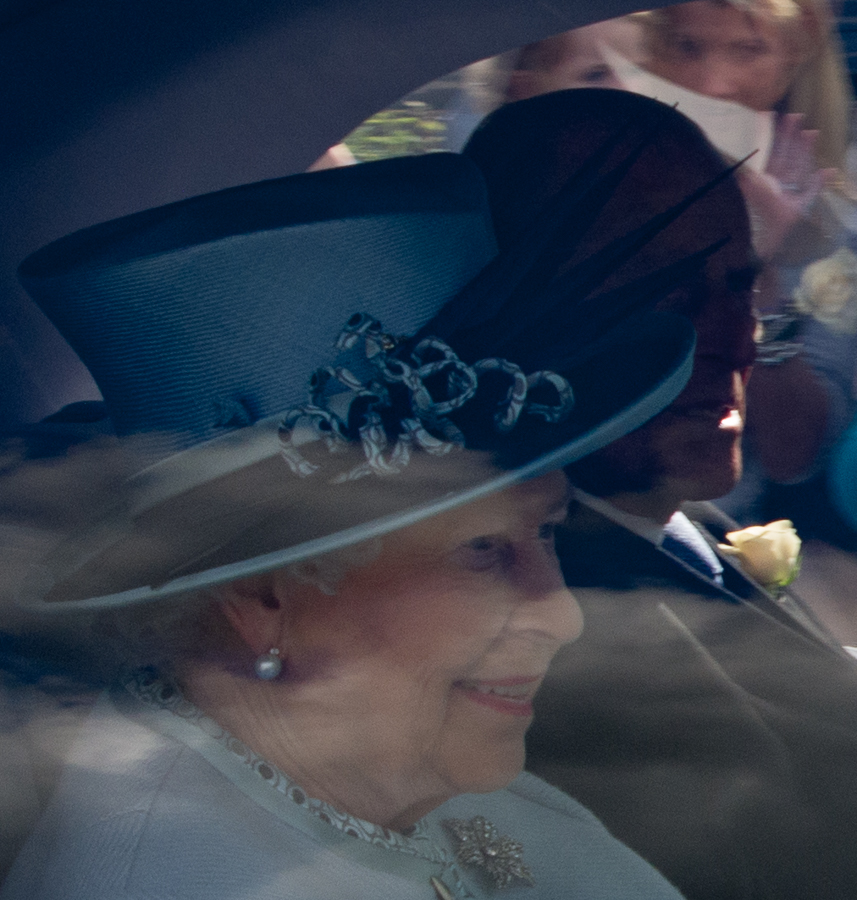
Queen’s Diamond Jubilee
Queen’s Diamond Jubilee. There were celebrations because Queen Elizabeth had been queen for 60 years.
| Date | 2012 |
|---|
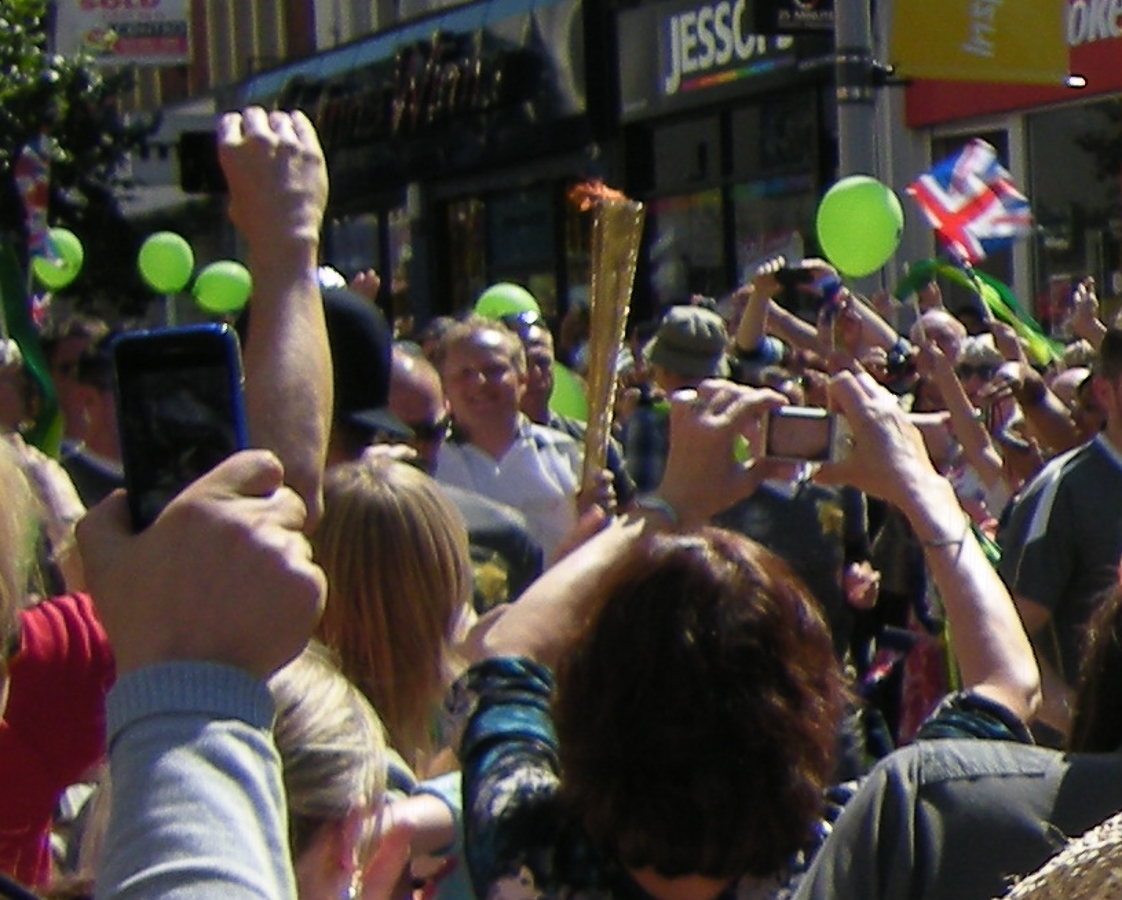
London hosted the Olympic and Paralympic Games
London hosted the 2012 Summer Olympic Games from July 27 to August 12 and the 2012 Summer Paralympic Games from August 29 to September 9. This marked the third time London had hosted the Olympic Games, following the 1908 and 1948 editions. London was the first to hold the games three times. The Paralympic Games were significant as they emphasized the Great Britian's role in the Paralympic movement.
| Date | 2016 |
|---|
Brexit vote
Brexit vote. 52% of the UK voted to leave the European Union (though in London, Scotland and Northern Ireland most people wanted to stay).
| Date | 2020 |
|---|
COVID-19 pandemic
The COVID-19 pandemic in the United Kingdom (granular timelines can be found here). Though later reporting indicated that there may have been some cases dating from late 2019, COVID-19 was confirmed to be spreading in the UK by the end of January 2020. The country was initially relatively slow implementing restrictions but a legally enforced stay-at-home order had been introduced by late March. Restrictions were steadily eased across the UK in late spring and early summer that year. By the Autumn, COVID-19 cases were again rising. This led to the creation of new regulations along with the introduction of the concept of a local lockdown, a variance in restrictions in a more specific geographic location than the four nations of the UK. Lockdowns took place in Wales, England and Northern Ireland later that season. In part due to a new variant of the virus, cases were still increasing and the NHS had come under severe strain by late December. This led to a tightening of restrictions across the UK. The first COVID-19 vaccine was approved and began its rollout in the UK in early December. 15 million vaccine doses had been given to predominantly those most vulnerable to the virus by mid-February. 6 months later more than 75% of adults in the UK were fully vaccinated against COVID-19. Restrictions began to ease from late February onwards and almost all had ended in Great Britain by August. The SARS-CoV-2 Delta variant drove an increase in daily case numbers that remained high through autumn, although the vaccination programme led to a lower mortality rate. The SARS-CoV-2 Omicron variant arrived in early December, driving a further increase in cases.
| Date | 2020 |
|---|
Britain left the European Union
Britain left the European Union. Despite many attempts by Parliament to ignore the result of the referendum and the EU putting as many obstacles as it could fine, partly in fear the if one member leaves, others could. EU continued with it's stated , if not formal, objective of becoming a Federal State.
| Date | 2022 |
|---|
Death of Queen Elizabeth II
Death of Queen Elizabeth II. Sadly, she died a few months after her Platinum Jubilee, in September. Her eldest son became King Charles III. National mourning took place in recognition of Queen Elizabeth II’s 70 years on the throne, and of service. Queues to file past the coffin lying in Stated exceeded 10 miles long at times.
| Date | 2022 |
|---|
Queen’s Platinum Jubilee
2022: Queen’s Platinum Jubilee. National celebrations took place in June to recognise Queen Elizabeth II’s 70 years on the throne. The longest English / British reign.
| Date | 2025 |
|---|
Renationalisation of the railways
The reprivitisation of UK Train Operating Companies (TOCs) is a significant step in the UK's journey towards a more efficient and reliable rail network. The Labour government's plan to renationalise the entire network by the end of 2027 aims to address the inefficiencies and public dissatisfaction associated with the privatised system established in the 1990s. The renationalisation process involves transferring services from currently privately-owned train operations into public ownership, with the goal of improving passenger service, increasing investment in infrastructure, and potentially saving taxpayers significant costs. This move is part of a broader plan to reform the entire railway system and is expected to lead to substantial improvements in service reliability and cost-effectiveness. The reprivatisation of UK Train Operating Companies (TOCs) is expected to begin in 2025, with South Western Railway being the first to be taken into public ownership on May 25, 2025. Following this, c2c will be nationalised on July 20, 2025, and Greater Anglia on October 12, 2025. The process is part of a broader plan to bring all railway services under public ownership, with the goal of completing the nationalisation by the end of 2027.