

6 Early Modern (1540–1699)
A period of religious reform, expanding state administration, and improved record‑keeping, including the introduction of parish registers.
Most events in this era derive from official records such as registers, wills, and legal documents; coverage improves, but interpretation still depends on record survival.
Total events: 55 for the Parish of Millbrook
Earliest event: 1540 Latest event: 1699
4 entity types represented; 9 categories represented
These 55 events account for approximately 14.6 percent of the Millbrook parish timeline (55 of 376 events).
| Date | 1540 | Category | Historical | Entity | National | Century | 16th |
|---|
British Explorers and Their Discoveries
List of British Explorers and Their Discoveries The following provides a brief overview of some of the most notable British explorers and their significant discoveries: Francis Drake 1540 - 1596 Francis Drake was an English explorer and privateer, who was the first Englishman to circumnavigate the world. He is most famous for his raids on Spanish ships and settlements in the Americas. Established trade routes and asserted England's presence globally. Captain James Cook 1728 - 1779 James Cook was a British explorer and navigator who mapped much of the world's coastlines and discovered many islands. He is most famous for leading three expeditions to the Pacific Ocean, during which he claimed the eastern coast of Australia for Britain. Revolutionized navigation and cartography. Sir Richard Francis Burton; Explorations in Asia and the Americas. Known for his extraordinary knowledge of languages and cultures. Sir Martin Frobisher; Made three voyages to the New World. Sighted Resolution Island and entered Frobisher Bay. Robert Falcon Scott 1868 - 1912 Robert Falcon Scott was a British Royal Navy officer and explorer who led two expeditions to the Antarctic, both of which ended in tragedy. On his first expedition, Scott led a party of five which reached the South Pole on 17 January 1912, only to find that they had been preceded by Roald Amundsen's Norwegian expedition. On the second expedition, Scott led a party of four which reached the pole on 17 January 1912, only to find that Amundsen had preceded them again. On their return journey, Scott and his companions all died from a combination of exhaustion, starvation and extreme cold. David Livingstone 1813 - 1873 David Livingstone is most famous for his exploration of the African continent and his discovery of the Victoria Falls. Henry Morton Stanley 1841 - 1904 Henry Morton Stanley is most famous for being the first person to cross Africa from east to west, and for his search for David Livingstone. William Adams 1564 - 1620 William Adams, also known as Miura Anjin, was a navigator and explorer who helped the Tokugawa shogunate establish trade with the Western world. He is most famous for his role in the opening of Japan to the Western world. William Baffin 1584 - 1622 William Baffin is most famous for being the first European to see the Baffin Bay, which he named in 1616. Henry Hudson 1570 - 1611 Henry Hudson is most famous for his discovery and exploration of the Hudson River and Hudson Bay. Opened up North America to European exploration and settlement. John Ross 1777 - 1856 Scottish naval officer and polar explorer. These explorers' contributions to global history, culture, and trade are significant and continue to be celebrated for their pioneering spirit and adventurous spirit.
| Date | 1542 | Category | Ecclesiastical Parish | Entity | Regional | Century | 16th |
|---|
Diocese of Bristol Created
Parts of Dorset transferred to new Diocese of Bristol.
| Date | 1546 | Category | Military | Entity | National | Century | 16th |
|---|
The Royal Navy continues from 1546
| Date | 1546 | Category | Military | Entity | National | Century | 16th |
|---|
The founding of the Royal Navy
The English Royal Navy was formally founded in 1546 by Henry VIII, though the Kingdom of England had possessed less-organised naval forces for centuries prior to this.
| Date | 1550 | Category | Historical | Entity | World | Century | 16th |
|---|
Dutch explorers during the Age of Discovery.
Notable Dutch explorers include Abel Tasman, Willem Barentsz, and Jan van Riebeeck, who made significant contributions to exploration during the Age of Discovery. Key Dutch Explorers Abel Tasman (1603 - 1659): Known for his voyages in the service of the Dutch East India Company (VOC), Tasman was the first European to reach New Zealand in 1642 and is credited with discovering Tasmania, which was named after him. His expeditions aimed to explore uncharted regions of the Southern Pacific Ocean. Willem Barentsz (1550 - 1597): A prominent explorer of the Arctic, Barentsz is best known for his expeditions to find a Northeast Passage to Asia. He discovered several islands in the Arctic, including Spitsbergen and Bear Island, during his voyages in the late 16th century. Jan van Riebeeck (1619 - 1677): He is recognized for founding Cape of Good Hope in 1652, establishing a refreshment station for the VOC. His settlement laid the groundwork for Dutch colonization in South Africa. Cornelis de Houtman (1565 - 1599): He led the first Dutch expedition to the East Indies, which opened up the spice trade for the Netherlands and marked the beginning of Dutch colonial expansion in Asia. François Thijssen (died 1638): An explorer who navigated the southern coast of Australia, contributing to the mapping and understanding of the region during the early 17th century. Jan Carstenszoon (c. 1560 - 1659): He was commissioned by the VOC to explore the southern coast of New Guinea and is known for his expeditions in the early 17th century. These explorers played crucial roles in expanding European knowledge of the world, establishing trade routes, and contributing to the Dutch colonial empire during the Age of Discovery. For a more detailed exploration of their voyages and contributions, you can refer to the sources provided.
| Date | 1554 | Category | Legislation | Entity | National | Century | 16th |
|---|
Repeal of The Act of Supremacy
The Act of Supremacy (which asserted England's independence from papal authority) was repealed in 1554 by Henry's devoutly Catholic daughter Queen Mary I when she reinstituted Catholicism as England's state religion. She executed many Protestants by burning.
| Date | 1555 | Category | Transport | Entity | National | Century | 16th |
|---|
The Highways Act 1555
The Highways Act 1555 was the first English statute to place the responsibility for road maintenance on local parishes, mandating parishioners to contribute labor and resources. In 1555, each parish became legally responsible for the upkeep of the roads in their area. Each householder was required to spend 6 days each year working on the roads, but this was very difficult to enforce and was a great burden on local money and labour. Trading between neighbouring towns suffered due to the bad transport links.
| Date | 1558 | Category | Historical | Entity | National | Century | 16th |
|---|
Elizabethan Religious Settlement.
The Act of Supremacy of 1558 re-established the Church of England’s independence from Rome and gave her the title of Supreme Governor of the Church of England
| Date | 1558 | Category | Historical | Entity | National | Century | 16th |
|---|
Queen Elizabeth I ruled, the Elizabethan Era, the Golden Age
Queen Elizabeth I, the Virgin Queen, rule was a time of great wealth for the country, although many thousands are made homeless because of changes in land use.
| Date | 1559 | Category | Social | Entity | National | Century | 16th |
|---|
English anti-Catholicism
English anti-Catholicism was grounded in the fear that the Pope sought to reimpose not just religio-spiritual authority but also secular power over England, a view which was vindicated by hostile actions of the Vatican. In 1570, Pope Pius V sought to depose Elizabeth with the papal bull Regnans in Excelsis, declaring her a heretic and dissolving Catholics' duty of allegiance to her. This engendered a state of war between the Pope and England, escalating to extended hostilities and culminating in a failed 1588 invasion by Spanish forces. Elizabeth's resultant persecution of Catholic Jesuit missionaries led to many executions at Tyburn. Priests like Edmund Campion who suffered there as traitors to England are considered martyrs by the Catholic Church, and a number of them were canonized as the Forty Martyrs of England and Wales. In the 20th century, a "Shrine of the Martyrs at Tyburn" was established at the Catholic Tyburn Convent in London
| Date | 1559 | Category | Legislation | Entity | National | Century | 16th |
|---|
Act of Uniformity
The Act found a middle ground between Catholicism and Protestantism. The Church of England’s modern doctrinal character is largely the result of this settlement, which sought to negotiate a middle ground between the two branches of Christianity.
| Date | 1559 | Category | Legislation | Entity | National | Century | 16th |
|---|
New Act of Supremacy
Queen Mary I actions were reversed by a new Act of Supremacy passed in 1559 under her successor, Elizabeth I, along with an Act of Uniformity which made worship in Church of England compulsory. Anyone who took office in the English church or government was required to take the Oath of Supremacy; penalties for violating it included hanging and quartering. Attendance at Anglican services became obligatory—those who refused to attend Anglican services, whether Roman Catholics or Puritans, were fined and physically punished as recusants.
| Date | 1559 | Category | Historical | Entity | National | Century | 16th |
|---|
Queen Elizabeth I crowned.
Queen Elizabeth I was the last of the Tudor dydasty. She was a Protestant queen.
| Date | 1565 | Category | Historical | Entity | National | Century | 16th |
|---|
The Royal Exchange
The merchant Thomas Gresham founded the Royal Exchange. It was established as the first purpose-built center for trading stocks in England and officially opened by Queen Elizabeth I on January 23, 1571. It proved to be hugely important in the economic development of England.
| Date | 1570 | Category | Historical | Entity | National | Century | 16th |
|---|
Catholic plots against Queen Elizabeth I
The 1570s and 1580s were dangerous decades for Elizabeth; she faced four big Catholic plots against her. All had the aim of getting the Catholic Mary, Queen of Scots on the throne and returning England to Catholic rule.
| Date | 1570 | Category | Historical | Entity | National | Century | 16th |
|---|
Pope issued a Papal Bull of Excommunication
1570 the Pope issued a Papal Bull of Excommunication against Elizabeth and actively encouraged plots against her.
| Date | 1577 | Category | Exploration and Colonisation | Entity | National | Century | 16th |
|---|
Sir Francis Drake was the first Englishman to circumnavigate the globe.
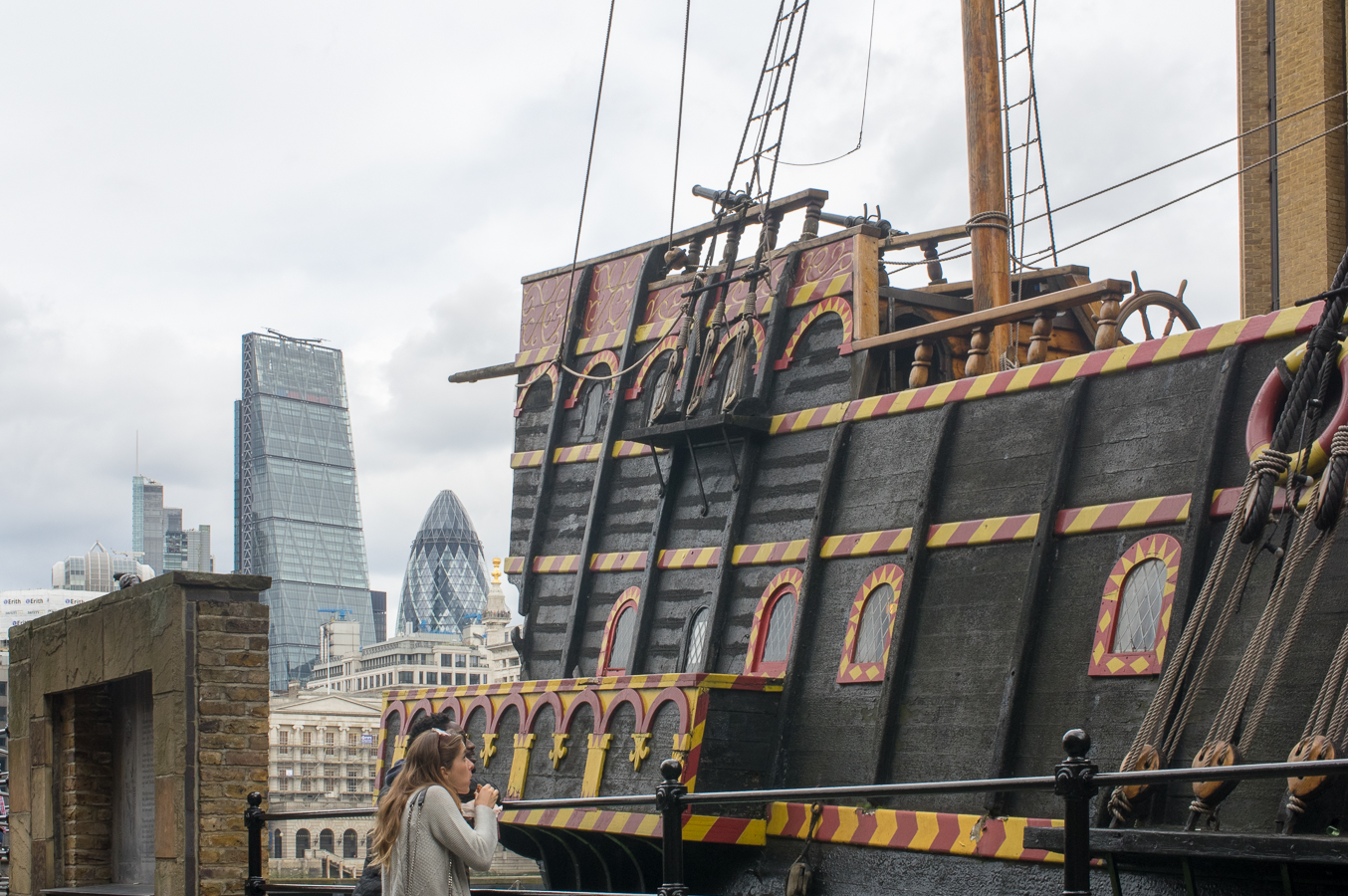
Sir Francis Drake was the first Englishman to circumnavigate the globe, completing his journey between December 13, 1577, and September 26, 1580. His expedition was authorized by Queen Elizabeth I and involved five ships, with Drake's flagship, the Golden Hind, being the only one to return intact. Drake's circumnavigation was not only a significant achievement in exploration but also a precursor to the Anglo-Spanish War, as he engaged in numerous raids against Spanish interests
| Date | 1581 | Category | Historical | Entity | World | Century | 16th |
|---|
Dutch Empire
The Dutch colonial empire comprised overseas territories and trading posts under some form of Dutch control from the early 17th to late 20th centuries, including those initially administered by Dutch chartered companies—primarily the Dutch East India Company (1602–1799) and Dutch West India Company (1621–1792)—and subsequently governed by the Dutch Republic (1581–1795) and modern Kingdom of the Netherlands (1815–1975). Following the de facto independence of the Dutch Republic from the Spanish Empire in the late 16th century, various trading companies known as voorcompagnie led maritime expeditions overseas in search of commercial opportunities. By 1600, Dutch traders and mariners had penetrated the lucrative Asian spice trade but lacked the capital or manpower to secure or expand their ventures; this prompted the States General in 1602 to consolidate several trading enterprises into the semi-state-owned Dutch East India Company (Dutch: Verenigde Oost-Indische Compagnie, VOC), which was granted a monopoly over Asian trade.
| Date | 1583 | Category | Exploration and Colonisation | Entity | National | Century | 16th |
|---|
Humphrey Gilbert claimed Newfoundland
Humphrey Gilbert, a member of parliament and explorer, claimed Newfoundland for Queen Elizabeth I
| Date | 1585 | Category | Historical | Entity | National | Century | 16th |
|---|
Sir Walter Raleigh, first English colony in America
In August 1585 Sir Walter Raleigh arranged for the first (albeit short-lived) English colony in America at Roanoke. The Roanoke Colony was the site of two attempts by Sir Walter Raleigh to found the first permanent English settlement in North America. The first colony was established at Roanoke Island in 1585 as a military outpost, and was evacuated in 1586. The more famous second colony, known as the Lost Colony, began when a new group of settlers under John White arrived on the island in 1587; a ship in 1590 found the colony abandoned. The fate of the 112 to 121 colonists remains largely unknown.
| Date | 1587 | Category | Historical | Entity | National | Century | 16th |
|---|
The execution of Mary, Queen of Scots
The execution of Mary, Queen of Scots took place on 8 February 1587 at Fotheringhay Castle, Northamptonshire, England. After nineteen years in English captivity following her forced abdication from the throne of Scotland, Mary was found guilty of plotting the assassination of her cousin, Elizabeth I, in what became known as the Babington Plot. The execution of Mary was the first legal execution of an anointed European monarch.
| Date | 1588 | Category | Historical | Entity | National | Century | 16th |
|---|
The Armada
A group of ships from Spain tried to invade England. The Catholic King of Spain wanted to overthrow Elizabeth I and return England to Catholicism. They were defeated by ships and storm.
| Date | 1592 | Category | Historical | Entity | National | Century | 16th |
|---|
Scottish parliament becomes Presbyterian.
This is a type of Protestant Christianity, influenced by the teachings of John Calvin.
| Date | 1598 | Category | Legislation | Entity | National | Century | 16th |
|---|
Parochial Registers Act 1598
Required parish registers to be kept on parchment and copies sent to diocese.
| Date | 1600 | Category | Registration | Entity | Parish | Century | 16th |
|---|
Bishop's Transcripts in use
Annual submission of parish register copies to bishop
| Date | 1600 | Category | Registration | Entity | Parish | Century | 16th |
|---|
Earliest known Bishop's Transcript
Earliest surviving Bishop’s Transcript copy; later parish formation reflected in BT series
| Date | 1603 | Category | Historical | Entity | National | Century | 17th |
|---|
The Crowns of Scotland and England align before formal Union
| Date | 1603 | Category | Historical | Entity | National | Century | 17th |
|---|
The start of the Stuart dynasty. The joining of the Crowns
The start of the Stuart dynasty. King James VI of Scotland was a close relation of the English Queen Elizabeth I. He was crowned as James I of England after her death because she has no children. It brought the two nations together (uneasily).
| Date | 1604 | Category | Historical | Entity | National | Century | 17th |
|---|
Great Brittaine comes into existance
On 20 October 1604, James issued a proclamation at Westminster changing his style to "King of Great Brittaine, France and Ireland, Defender of the Faith, &c."
| Date | 1605 | Category | Historical | Entity | World | Century | 17th |
|---|
First French colonial empire
The French colonial empire consisted of the overseas colonies, protectorates, and mandate territories that came under French rule from the 16th century onward. A distinction is generally made between the "first French colonial empire", that existed until 1814, by which time most of it had been lost or sold, and the "second French colonial empire", which began with the conquest of Algiers in 1830. On the eve of World War I, France's colonial empire was the second-largest in the world after the British Empire. During the 16th century, the French colonization of the Americas began. Excursions of Giovanni da Verrazzano and Jacques Cartier in the early 16th century, as well as the frequent voyages of French boats and fishermen to the Grand Banks off Newfoundland throughout that century, were the precursors to the story of France's colonial expansion. But Spain's defense of its American monopoly, and the further distractions caused in France itself in the later 16th century by the French Wars of Religion, prevented any constant efforts by France to settle colonies. Early French attempts to found colonies in Brazil, in 1555 at Rio de Janeiro ("France Antarctique") and in Florida (including Fort Caroline in 1562), and in 1612 at São Luís ("France Équinoxiale"), were not successful, due to a lack of official interest and to Portuguese and Spanish vigilance. The story of France's colonial empire truly began on 27 July 1605, with the foundation of Port Royal in the colony of Acadia in North America, in what is now Nova Scotia, Canada. A few years later, in 1608, Samuel de Champlain founded Quebec, which was to become the capital of the enormous, but sparsely settled, fur-trading colony of New France (also called Canada).
| Date | 1607 | Category | Exploration and Colonisation | Entity | National | Century | 17th |
|---|
English/British colonies of North America
| Date | 1607 | Category | Exploration and Colonisation | Entity | National | Century | 17th |
|---|
Jamestown Colony in North America founded
Jamestown Colony, first permanent English settlement in North America, located near present-day Williamsburg, Virginia. Established on May 14, 1607
| Date | 1620 | Category | Exploration and Colonisation | Entity | National | Century | 17th |
|---|
Mayflower. New World
Mayflower was an English square-rigged merchant sailing ship, active from before 1609 until 1622. She was 110 feet long and 25 feet in the beam with several decks. She was notable in that she transported a group of English families, known today as the Pilgrims, from England to the New World in 1620. After 10 weeks at sea, Mayflower, with 102 passengers and a crew of about 30, reached what is today the United States, dropping anchor near the tip of Cape Cod, Massachusetts on 21 November [O.S. 11 November] 1620. The Pilgrims, often conflated with the Puritans (who sought to reform and purify the Church of England from within), sought separation from the church and prayed privately. They believed that the church's resistance to reform and its Roman Catholic past left it beyond redemption. Starting in 1608, a group of English families departed England for the Netherlands, where they could worship freely. By 1620, the community resolved to cross the Atlantic Ocean for America, which they considered a "new Promised Land" where they would establish Plymouth Colony.
| Date | 1624 | Category | Historical | Entity | World | Century | 17th |
|---|
French West Indies
As the French empire in North America grew, the French also began to build a smaller but more profitable empire in the West Indies. Settlement along the South American coast in what is today French Guiana began in 1624, and a colony was founded on Saint Kitts in 1625 (the island had to be shared with the English until the Treaty of Utrecht in 1713, when it was ceded outright). The current isle of the Commonwealth of Dominica in the eastern Caribbean also fell under increasing French settlement from the early 1630s. The Compagnie des Îles de l'Amérique founded colonies in Guadeloupe and Martinique in 1635, and a colony was later founded on Saint Lucia by (1650). The food-producing plantations of these colonies were built and sustained through slavery, with the supply of slaves dependent on the African slave trade. Local resistance by the indigenous peoples resulted in the Carib Expulsion of 1660. France's most important Caribbean colonial possession was established in 1664, when the colony of Saint-Domingue (today's Haiti) was founded on the western half of the Spanish island of Hispaniola. In the 18th century, Saint-Domingue grew to be the richest sugar colony in the Caribbean. The eastern half of Hispaniola (today's Dominican Republic) also came under French rule for a short period, after being given to France by Spain in 1795
| Date | 1633 | Category | Ecclesiastical Parish | Entity | Parish | Century | 17th |
|---|
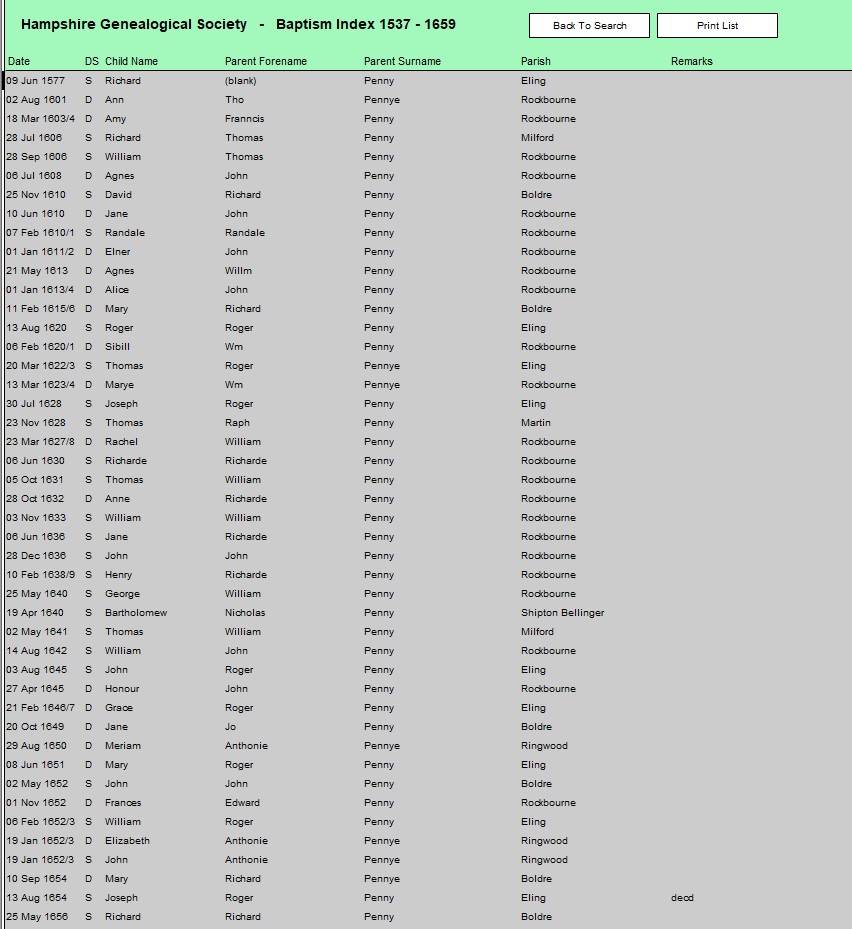
Earliest Known Baptism Record
| Date | 1633 | Category | Ecclesiastical | Entity | Parish | Century | 17th |
|---|
Earliest known burial register
Earliest surviving parish burial record
| Date | 1633 | Category | Ecclesiastical | Entity | Parish | Century | 17th |
|---|
Earliest known marriage register
Earliest surviving parish marriage record
| Date | 1633 | Category | Ecclesiastical Parish | Entity | Parish | Century | 17th |
|---|
Parish Baptism records
| Date | 1633 | Category | Ecclesiastical | Entity | Parish | Century | 17th |
|---|
Parish burial registers
Ongoing parish burial record series
| Date | 1633 | Category | Ecclesiastical | Entity | Parish | Century | 17th |
|---|
Parish marriage registers
Ongoing parish marriage record series
| Date | 1642 | Category | Historical | Entity | National | Century | 17th |
|---|
The English Civil War
King Charles I was not a good leader and wanted money for a war with Scotland. Parliament did not want to help him. People who supported the king (Cavaliers) fought people who supported Parliament (Roundheads). About 10% of the population died in the fighting.
| Date | 1649 | Category | Historical | Entity | National | Century | 17th |
|---|
Britain became a republic (called ‘the Commonwealth’).
King Charles I was executed, had his head cut off at Whitehall. A military leader called Oliver Cromwell took control. He became a dictator.
| Date | 1660 | Category | Historical | Entity | National | Century | 17th |
|---|
The Restoration of the Monarchy.
Cromwell died in 1658 and his son Richard took over. He was not a good leader. Charles I’s son was invited back to the country to be King Charles II.
| Date | 1663 | Category | Transport | Entity | National | Century | 17th |
|---|
The Turnpike Era
By the 16th century, the transport need was mostly met by coasting shipping, e.g. to London from Kings Lynn, Hull and Newcastle. Rivers were also used. In 1600, there were 500 miles of navigable waterways, increasing to 1160 miles by 1720. There was often local opposition to the waterway developments and Acts of parliament were passed to overcome this. Trade increased as result of the improvements. In 1663, tolls were levied on vehicles using a busy section of the Great North Road to supplement local repairs, the first Turnpike Road. This was the only turnpike road until 1696. These turnpike roads were the responsibility of local trusts who collected the tolls. Some of the income was spent on the roads and the remainder was paid out in dividends to the trustees. Each road required an Act of Parliament to permit the levying of tolls. They were basically commercial ventures like canals and attracted the entrepreneurs of the day. Then a series of turnpike Acts was progressively introduced, and there was a boom in the 1720s. By 1750, there were 143 turnpike trusts covering 3386 miles of roads, mostly near London, the Severn Valley and the West Midlands. Most turnpike roads were made after 1750. By 1830, there were 20,000 miles of turnpike roads, producing an annual revenue of £500,000. The better roads and the establishment of stage coaches drastically cut journey times, e.g. London to Bristol in 1750 took 2 days, but only 19 hours by 1785. With the increasing levels of fraud and corruption in a small number of Turnpike trusts as the Victorian era progressed, and the continuing rivalry of the railways making the other trusts increasingly uneconomic, the Government saw fit to act and effectively nationalised the trusts from the 1870s onwards (as they would with the railways in 1948). The responsibility of road maintenance was then passed on to the County and County Borough councils as part of the Local Government Act 1888, who also assumed responsibility of all the other roads that had previously been 'maintained' by other local bodies at that time. In many cases, the councils inherited routes that were far superior to any others in the area, and owing to the nature of the origins of the trusts, these were routes that connected the most important towns and cities. It is therefore hardly surprising that most of these roads would feature again in the 1922 Road Lists, or its B-road equivalent. Even today, there are few rural routes bearing an A- or B classification which have no link to the Turnpike Network of 150 years ago. And, to turn that around, there are few former turnpikes which have never been classified.
| Date | 1665 | Category | Historical | Entity | National | Century | 17th |
|---|
The Great Plague of London
About 20% of London’s population died of bubonic plague.
| Date | 1666 | Category | Legislation | Entity | National | Century | 17th |
|---|
Burial in Woollen Act 1666
Required burial in wool to support English wool trade. Penalties for non-compliance.
| Date | 1666 | Category | Historical | Entity | National | Century | 17th |
|---|
The Great Fire of London
A fire that started in a bakery in Pudding Lane destroyed 80% of the city, but with minimal casualties.
| Date | 1667 | Category | Military | Entity | National | Century | 17th |
|---|
The Dutch raided Chatham Dockyard
The Dutch successfully raided Chatham Dockyard in June 1667, capturing and destroying English ships and delivering one of the worst defeats in Royal Navy history. The Dutch invasion at Chatham occurred during the Second Anglo-Dutch War (1665–1667), a conflict driven by commercial rivalry and naval supremacy between England and the Dutch Republic. England, under King Charles II, faced economic strain, unpaid sailors, and the aftermath of the Great Plague (1665) and the Great Fire of London (1666), leaving the nation vulnerable. The Dutch, led by Lieutenant-Admiral Michiel de Ruyter and politically directed by Johan de Witt, seized this opportunity to strike decisively
| Date | 1668 | Category | Social | Entity | National | Century | 17th |
|---|
The Bawdy House Riots
The Bawdy House Riots (1668): Apprentices in London protested against the presence of brothels in the city, leading to the destruction of several bawdy houses.
| Date | 1678 | Category | Legislation | Entity | National | Century | 17th |
|---|
Burial in Woollen Act 1678
Strengthened requirements for burial in wool. Affidavits required.
| Date | 1688 | Category | Historical | Entity | National | Century | 17th |
|---|
Glorious Revolution
The deposition of King James II in November 1688. He was replaced by his daughter Mary II and her Dutch husband, James's nephew William III of Orange. The two ruled as joint monarchs of England, Scotland, and Ireland until Mary's death in 1694
| Date | 1689 | Category | Historical | Entity | National | Century | 17th |
|---|
The Glorious Revolution
King James II (King Charles II’s brother) was unpopular – and Catholic. He fled abroad after William of Orange (the husband of his Protestant daughter Mary) came with an army. Mary and William became joint monarchs, known as William III and Mary.
| Date | 1692 | Category | Historical | Entity | National | Century | 17th |
|---|
The Glencoe Massacre
Catholics in Scotland were told to swear their support of the new king William III (a Protestant) by January 1, 1692. The chief of the MacDonald clan did it too late. In return, 34 men, 2 women and 2 children were killed by soldiers of the Earl of Argyll on the orders of the king.
| Date | 1698 | Category | Social | Entity | National | Century | 17th |
|---|
Popery Act 1698
"An Act for the further preventing the Growth of Popery" The act was intended to address an alleged recent growth of Roman Catholicism by ensuring the existing anti-Catholic laws were more strongly applied.
| Date | 1699 | Category | Historical | Entity | World | Century | 17th |
|---|
French Louisiana
In 1699, French territorial claims in North America expanded still further, with the foundation of Louisiana in the basin of the Mississippi River. The extensive trading network throughout the region connected to Canada through the Great Lakes, was maintained through a vast system of fortifications, many of them centred in the Illinois Country and in present-day Arkansas. While the peace treaty saw France's Indian outposts, and the Caribbean islands of Martinique and Guadeloupe restored to France, the competition for influence in India had been won by the British, and North America was entirely lost – most of New France was taken by Britain (also referred to as British North America), except Louisiana, which France ceded to Spain as payment for Spain's late entrance into the war (and as compensation for Britain's annexation of Spanish Florida). Also ceded to the British were Grenada and Saint Lucia in the West Indies. Although the loss of Canada would cause much regret in future generations, it excited little unhappiness at the time; colonialism was widely regarded as both unimportant to France, and immoral. France secretly ceded Louisiana to Spain in November 1762 during the Seven Years' War. This transfer was part of the Treaty of Fontainebleau, which was not made public until 1764. Spain took full command of Louisiana in 1769, and the territory was primarily located in the western basin of the Mississippi River, including New Orleans. France officially sold Louisiana to the United States on December 20, 1803. This transfer was part of the Louisiana Purchase, which significantly expanded U.S. territory. The purchase itself was finalized in 1803, granting the U.S. control over a vast area of land.