
Environment


Environment
Environment
The environment is potentially a huge subject.
Conceptually it can be a terrarium or even smaller, up to the whole world.
Additional rainwater harvesting
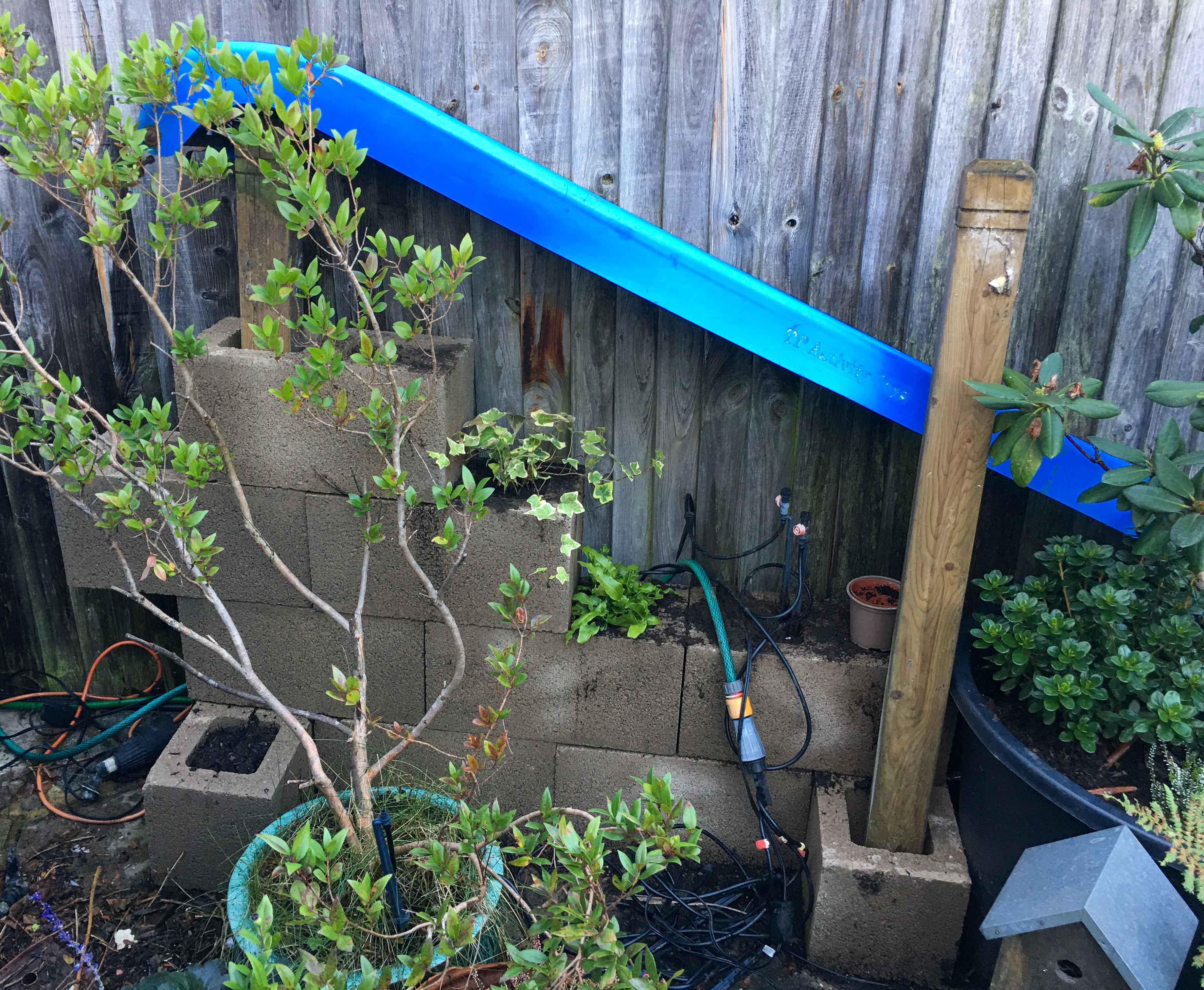
The additional capacity is provided by two 800 litres water buts from Ecosure. The two water buts will be linked together to form a 1600 litres or 422 gal. storage. The rainwater does not need to be processed by the reed bed to make it useable, unlike the greywater. This arrangement will therefore reduce the electricity requirement to pump water from the reed bed to storage. Apart that is for any overflow water. The overflow from the new water butts will outfall onto David's old slide, repurposed into a water course, which will then flow into the reed bed.
Natural Swimming Pools/Ponds
Moving on from my homemade readbed project, not only has an industry emerged catering to Water Harvesting, which is a lot less Heath Robinson than my early attempt, there is also a resurgence in wild swimming. See history of wild swimming. Even the BBC broadcast about wild swimming in one of Kate Humble's programmes, 'Off the beaten track'. Unfortunately Iplayer does not have the programme but here are some clips. Kate with Natasha Brooks, explain why. Kate enters the water. Thermals back on.
A very different view of wild water with Kate Silverton.
We were holidaying in the area and found ourselves at Carding Mill Valley Reservoir just as somebody was going for a swim. The signs allow swimming but not on your own. It was evident that she was a regular.
One length done and we don't feel the need to stay for safety's sake, and leave her to her swim.
It looks a beautiful place to swim, very peaceful and quite, with just the bird song. Proper communing with nature.
Some of the comments on Wild Swimming website for this location even suggest skinny dipping is OK.
However, is is eventently cold.
Development of Epsom Court
Before delving into the maps of Epsom and particularly Epsom Court I would like to refer you to The Epsom and Ewell History Explorer (EEHE) and the article on Epsom Court.
This site brings together articles covering the local history of the area. The articles may have been inspired by many things including specific suggestions, memories, printed works and of course the internet.
Epsom Court is one such article.
Epsom Court Alias Epsom Lodge or Court Farm, formerly the Saxon manor house of Epsom established upon a Roman site?
The Location It may be conjectured that a Roman road linked the villa and tile-works on Ashtead Common to the site of Epsom Court Farm where Toland, in his letter descriptive of Epsom from 1711, mentioned Roman remains. This would have extended from Woodcock Corner on the parish boundary, proceeding south of the present B280 Chessington Road and Christchurch Road to Clayhill Green. Seller’s map of 1690 indicates a secondary route to Ewell which passed Ashtead’s Woodfield before continuing north of Ebsham Wells and then on by Ebsham Court generally following a line suggested by Reginald White on his map in Ancient Epsom (1928). This way would have crossed a stream which still issues from The Cricketers’ pond at Stamford Green but has been contained in a culvert below Christchurch Road. At some time in history, however, a ford here would have been lined with imported stones (likely to have been flints) to improve the going over clay and so the location became known as Stamford as a corruption of the Old English stan [stone] ford. Then, as a letter in The Times of 31 August 1925 reported, ‘at the back of West Hill House, Epsom, there was a piece of Roman road showing … [which] might only have gone to Ebba’s Hame, the Court Farm, Epsom’. From Clay Hill Green the route continued along the present bridle path, Pound Lane. The supposed Roman road appears on the 18th century Rocque map included later in this piece.

My homemade reedbed water harvesting project
| Project: | Grey water reclamation at home |
| Client: | Me / Planet Earth |
| Cost / Value: | “Undisclosed” |
| Programme: | Spring 2006 – Spring 2007 |
| Client’s Requirements: | How to beat the hosepipe ban and save the planet |
| The inspiration and research: | Article on Monday, 13 March 2006 |
Article on Monday, 13 March 2006, extracted from BBC News.
Hosepipes banned by Thames Water
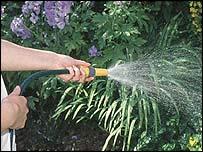
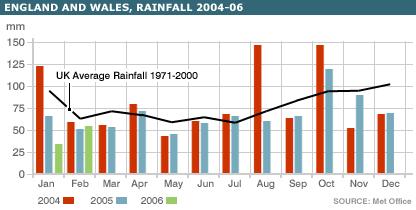
Britain's biggest water company will ban hosepipes and sprinklers from next month, the firm has announced. Thames Water, whose eight million customers will be affected by the ban, says two unusually dry winters have caused "serious" water shortages. The South East has experienced its driest period for more than 80 years
I used the water usage calculator on the BBC website and estimated that my family uses approximately 400lts of water per day. That equates to 133lts per person which compares favourably to the national average of 155lts per day. Of this about 60% is for showers and baths. However, the above calculation did not include the irrigation system that I have in the garden. I recalculated the water usage including use of a hosepipe to water the garden, but for a reduced time to account for the difference between a hose pipe and irrigation system rate of flow. This added 90 lts per day. Coincidently the water used for showers and baths equates to 80 lts per day.
We already did some water conservation by collecting rain water using a single water butt and leaving the grass to grow a little longer, and not watering it. So it seemed a simple solution to use the bath waste water to water the garden. At this point I should have just decided to have showers with the plug in and siphon out the water with a hose after it had cooled. As sane people eventually did. You can even now buy special products specifically designed to make it easier.
UK Housing Stock
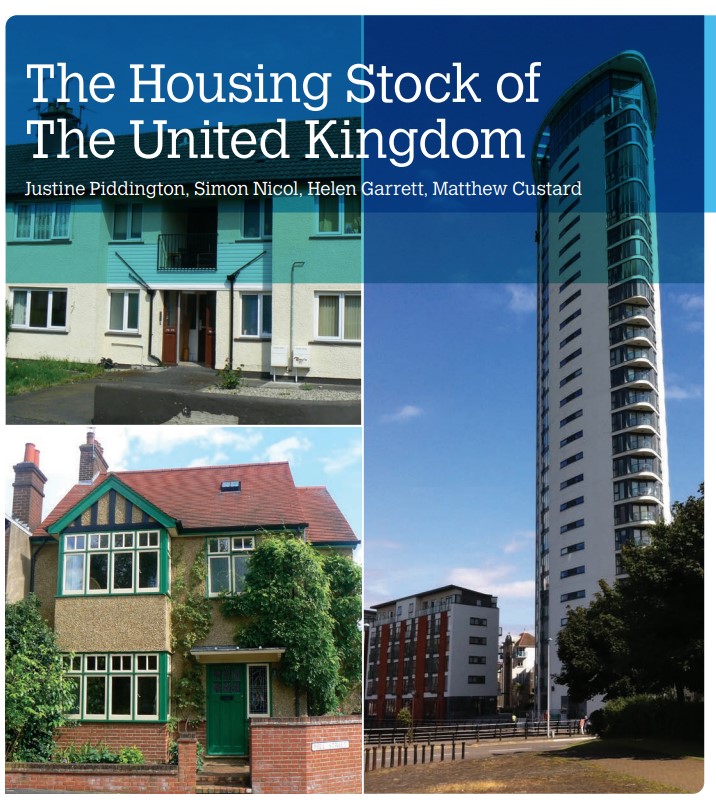
The first port of call on this discussion is the BRE Trust Report, the Housing Stock of the UK.
Subcategories
Environment at home Article Count: 24
Environment at home
It is important how we use the environment around us. In the past it has sometimes been more about abuse that use. We are now more aware of the environment around us, in several different ways.
- the surroundings or conditions in which a person, animal, or plant lives or operates
- the natural world, as a whole or in a particular geographical area, especially as affected by human activity.
In this section, I look at not the wider environment around us nor climate change, but our home. Of course the wider environment impacts the local environment of our home, and the things we do within it, hopefully in an Environmentally Conscious manner. In and eco friendly and sustainable way.
The Wider Environment Article Count: 2
The Wider Environment
In the Wider Environment section I look outside of by home and discuss a bigger area of concern, weather that is the town, the country, or the continent in which I live. Or indeed the World.
List of Associated Articles
Counter